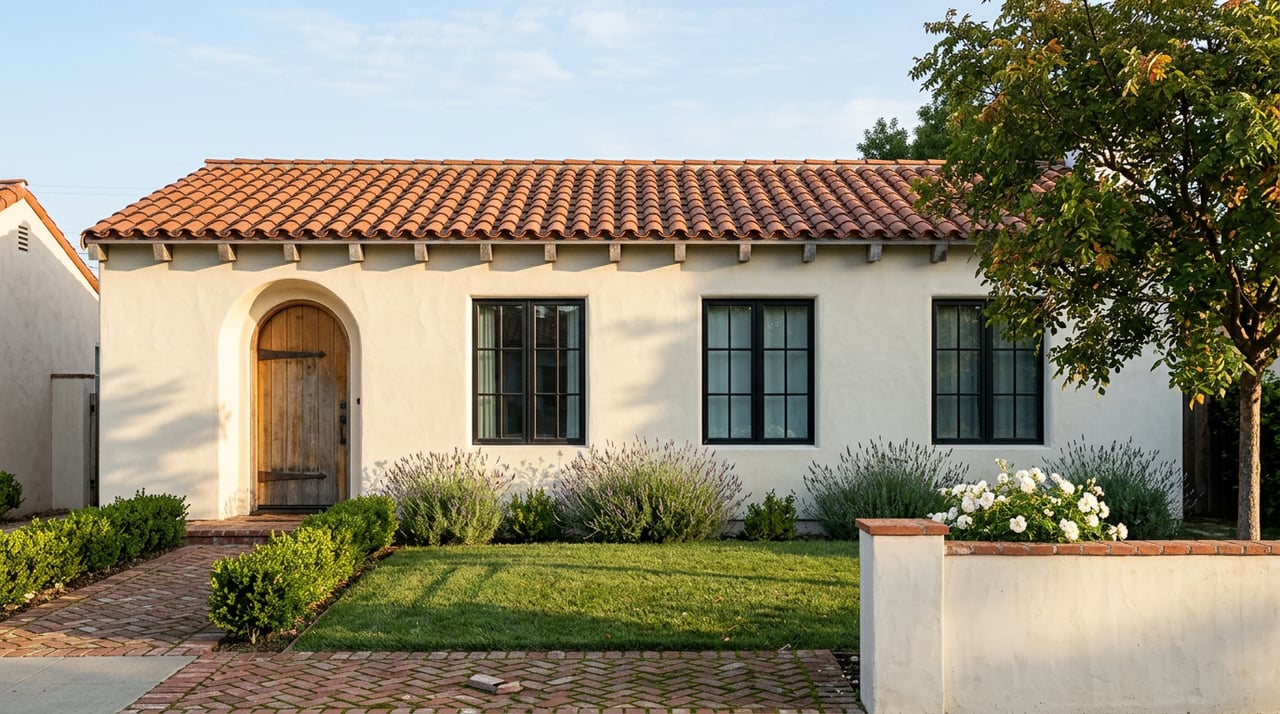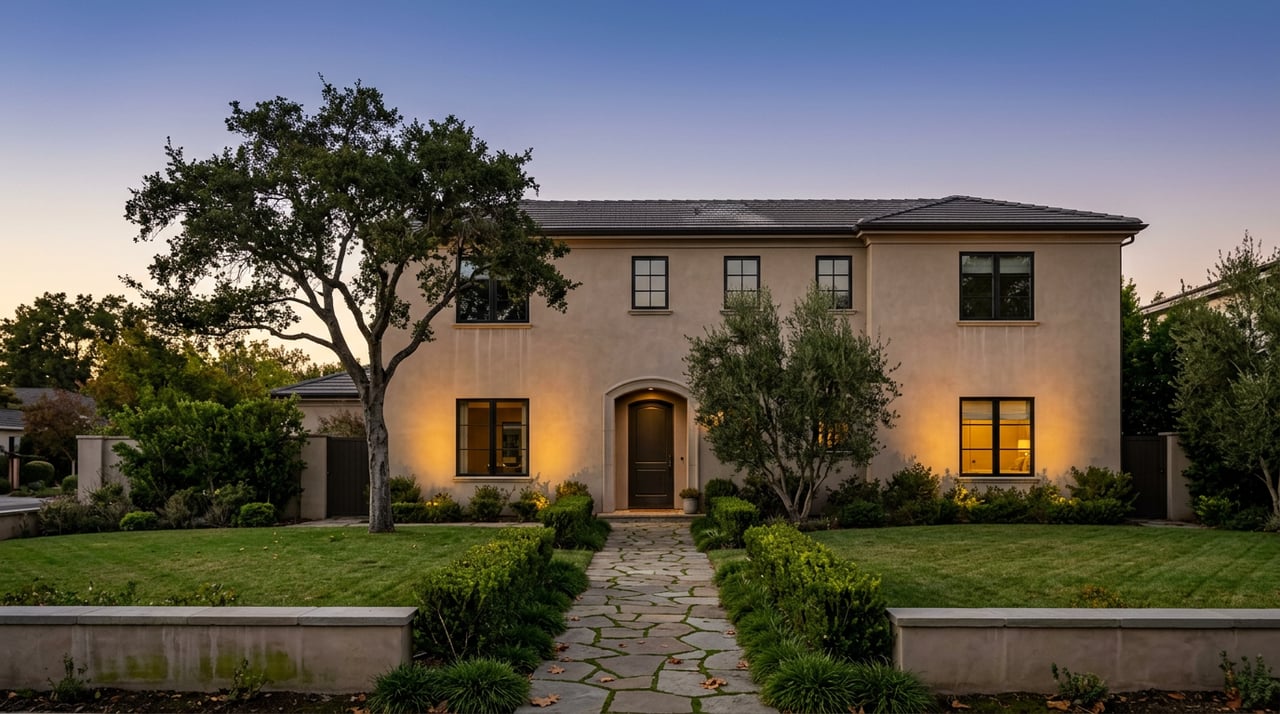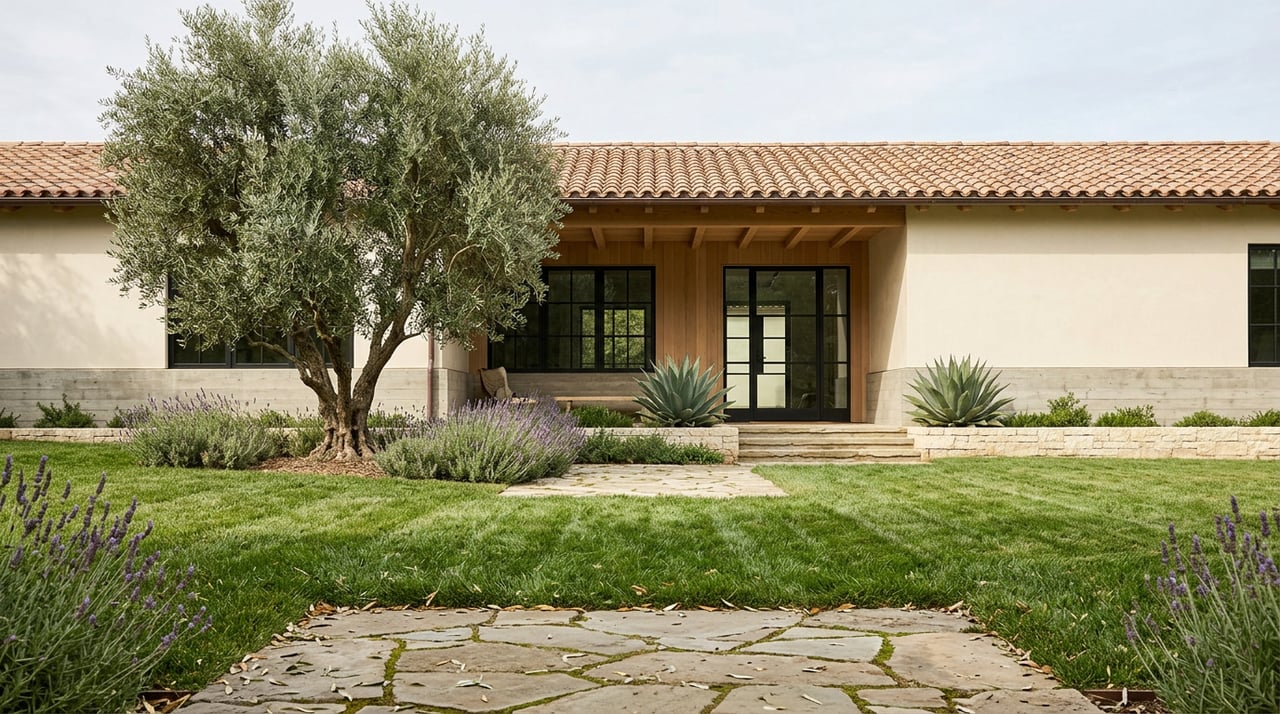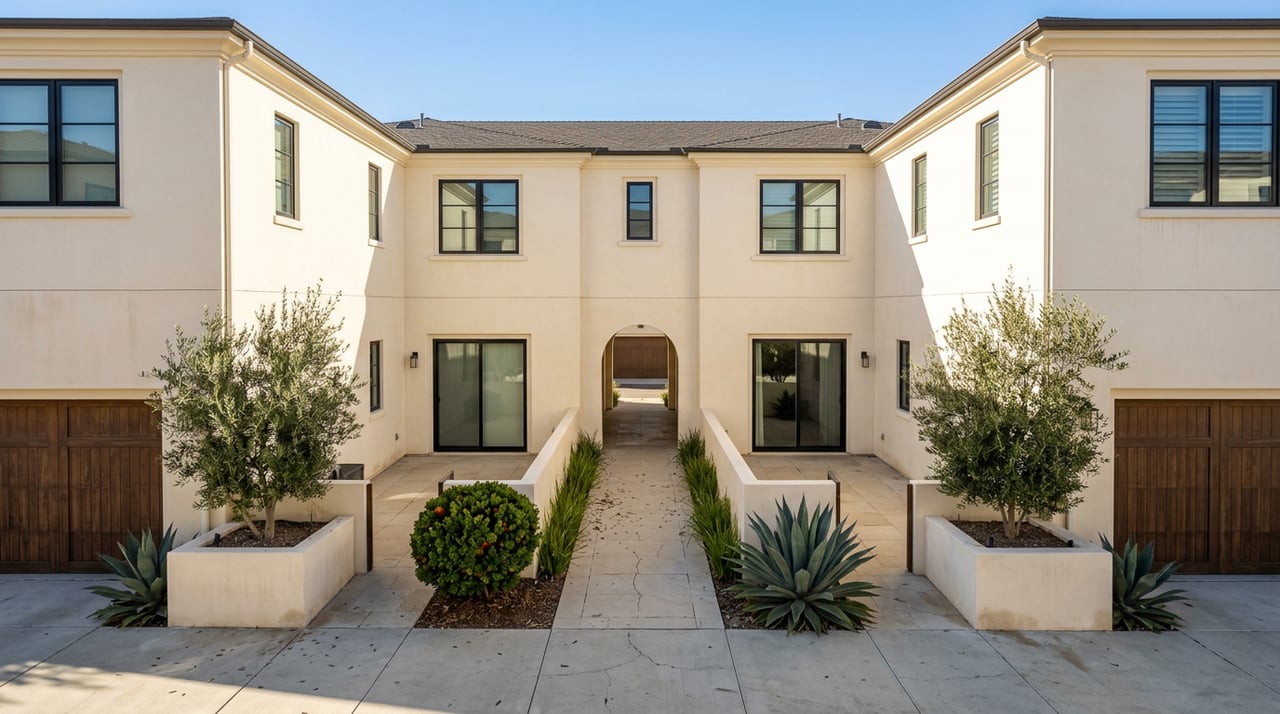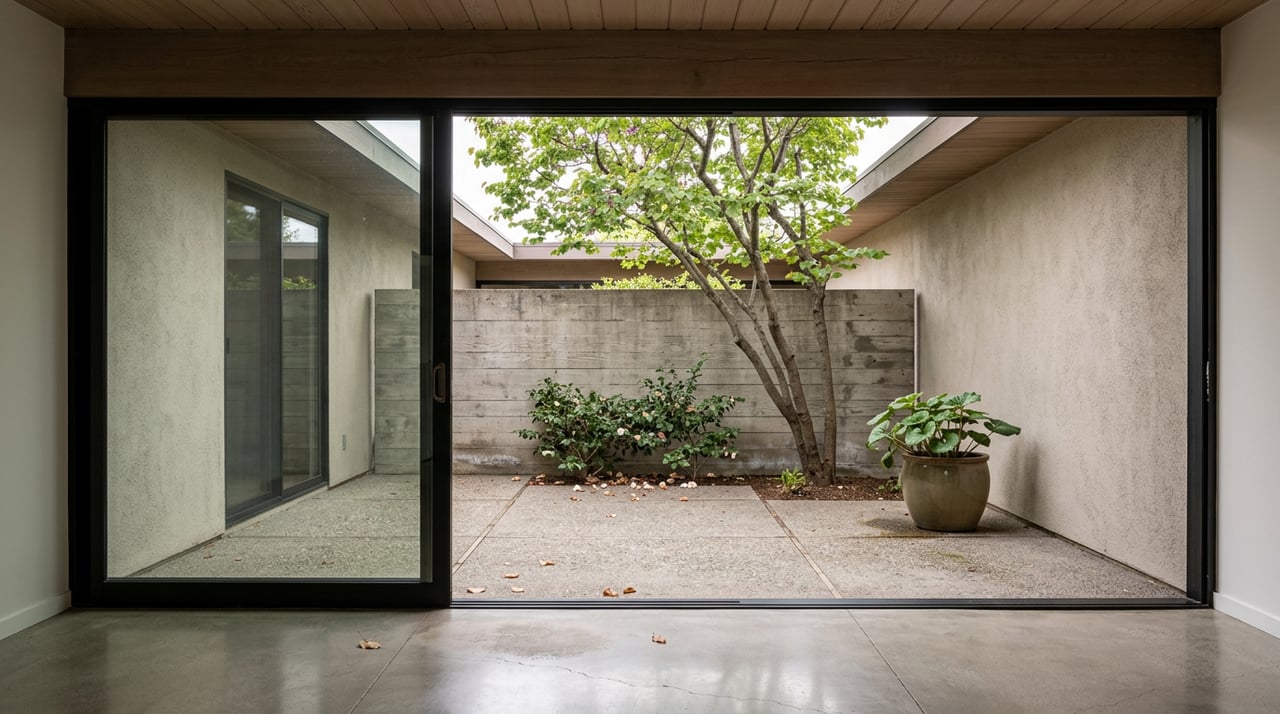
Walk into an open house in Fairwood or Cherry Chase on a Sunday afternoon and the pitch makes itself. Glass walls open onto a private atrium. Post-and-beam ceilings run the length of the living room without a single interior load-bearing wall breaking the sightline. The floor is warm underfoot in a way that has nothing to do with the thermostat setting, because the heat is coming from directly beneath your shoes.
That warmth is doing more work than the listing photos suggest. Two Eichlers on the same street, built the same year, can look structurally identical during a walkthrough and be entirely different purchases underneath. The difference has nothing to do with the kitchen remodel or the roofline. It comes down to what kind of pipe is running through the concrete slab, and that is something no open house will tell you.
Sunnyvale Has More of These Than Almost Anywhere
Sunnyvale is not a footnote in Eichler history. It is the city where Joseph Eichler built his first homes in 1949, scattered across lots in the Sunnyvale Manor neighborhood before the tract-home model he became known for took shape. Today the city holds roughly 1,100 Eichler homes spread across 16 distinct tracts, a concentration second only to Palo Alto in the Bay Area. Fairbrae, Fairwood, Rancho Verde, Fairorchard, Cherry Chase, Midtown, Parmer Place, Primewood, Rancho Sans Souci, and Fairpark Addition each carry their own construction year and their own history, but they share the same underlying system: radiant heat piped through a concrete slab, installed decades ago and never meant to be inspected without a jackhammer.
Steve Wozniak grew up in one of these homes, a Fairorchard Eichler on Edmonton Avenue, which says something about how ordinary these houses were meant to feel even as they became architecturally significant. The city has since adopted formal Eichler Design Guidelines to help owners preserve rooflines, materials, and street presence during remodels. Those guidelines protect what you can see. They say nothing about what is running through the slab beneath your feet, because that was never the point of the program.
Two Systems, One Slab
Radiant heat in an Eichler runs through tubing embedded directly in the concrete floor, connected to a boiler and pump that circulate hot water. The tubing is either copper or steel, and which one your slab contains determines almost everything about what happens when it eventually fails.
Copper tubing, when it leaks, is repairable. The failure mode is stress at a crack in the slab, not corrosion from within a closed loop, so specialists can pinpoint and fix individual leaks without replacing the system. Steel tubing behaves differently. Once it starts leaking, the degradation tends to spread, and most specialty contractors will tell you the practical fix is retiring the system altogether, usually in favor of hydronic baseboard heat or mini-splits.
| Copper Tubing | Steel Tubing | |
|---|---|---|
| Typical failure | Isolated cracks from slab stress | Ongoing corrosion once breached |
| Repairable? | Yes, leak by leak | Rarely, once failure begins |
| Common fix | Pinpoint repair, re-pour small slab section | Full system replacement (baseboard, mini-splits) |
| Rough cost range | $1,250 to $2,500 for most homes, capped near $7,500 | A separate, larger project, priced independently |
None of this shows up on a walkthrough. A home with a slowly failing steel system can feel exactly as warm and well cared for as one with a sound copper loop, right up until the day it isn't.
The Leak You Won't See
The reason radiant leaks catch owners off guard is structural, not a matter of neglect. When a copper tube develops a hairline crack, the water pressure in the closed loop keeps the system running by automatically pulling in fresh water to replace what's lost. Jerry Rothfeld, who has serviced these systems for decades in Marin, put it plainly: "The water usually goes straight down into the ground." There is no puddle. No stain spreading across the floor. Just a slow, invisible loss that shows up eventually as an unexplained jump in the water bill or a cold patch on a floor that used to feel even.
That is the mechanism worth understanding before you write an offer. A seller who has lived in a Fairbrae home for thirty years and never noticed a problem is not necessarily hiding one. The system is built to mask its own failure.
What a Pressure Test Actually Tells You, and What It Doesn't
The standard way to check a radiant system before closing is a hydrostatic pressure test, performed by a specialty hydronic contractor rather than a general home inspector or an HVAC company. The boiler is isolated, the system is pressurized, and the gauge is watched for a drop. That test answers one question only: is there a leak somewhere in the loop. It does not tell you how many leaks, where they are, or whether the tubing is copper or steel.
Finding the actual leak requires a separate detection step, usually done with helium injected into the drained system and traced with a detector sensitive enough to find it through tile or flooring without tearing up the whole floor. Most specialty contractors report the average Eichler has somewhere between one and five leaks by the time someone finally checks, which they consider typical for a system this age rather than a sign of unusual neglect. The full process, from detection through repair, often takes a single working day for a typical Eichler footprint, and the invoice usually lands in that $1,250 to $2,500 range unless the system needs extensive work throughout the slab.
Where Insurance Fits, and Where It Doesn't
Homeowners insurance sometimes helps offset the cost, but the coverage is narrower than most buyers assume. Specialty contractors who process these claims regularly report that carriers will often reimburse close to 90 percent of the portion of the bill classified as non-plumbing work, treating the slab breach as sudden water damage rather than routine maintenance. That said, some carriers have started excluding radiant panel leaks from coverage altogether in recent years. If you're underwriting the true cost of owning one of these homes, don't build your budget around an insurance reimbursement you haven't confirmed with the actual policy.
What This Means for the Disclosure Statement
California's Transfer Disclosure Statement requires sellers to report known defects in structural components and major systems, heating included, using the standard form required under Civil Code section 1102. The California Department of Real Estate's own guidance on these disclosures makes clear what the form covers and what it doesn't: sellers report what they know, not what a professional inspection might eventually find. There is no requirement that a seller commission a pressure test before listing.
That distinction matters more in an Eichler than in most other 1950s housing stock, precisely because the failure mode is invisible from inside the house. A clean disclosure on the heating system in a Fairbrae or Rancho Verde listing tells you the seller hasn't noticed a problem. It does not tell you the system has been tested. Those are different claims, and the gap between them is exactly where buyers get surprised after close of escrow.
Ownership tenure is a more useful signal than the tract name. Tracts closer to Apple's campus, including Fairwood, saw a wave of turnover during the 2010s as relocating tech buyers moved in, which means some of those homes have changed hands recently enough to have had systems checked or upgraded during a remodel. Tracts with a higher share of original or long-tenured owners may have gone decades without anyone running a pressure test at all. Either way, the question to ask the listing agent isn't which neighborhood you're in. It's how long the current owner has lived there and whether the radiant system has ever been tested.
Why This Can't Wait Until You're in Contract
In the three months ending June 2026, the median sale price for a Sunnyvale home was $1.8 million, down 17.1 percent from the same period a year earlier, with the typical listing under contract in about 13 days after fielding roughly four competing offers. Prices have cooled from last year's pace, but the market hasn't slowed down enough to hand buyers a leisurely inspection window. A standard contingency period doesn't leave much room to schedule a specialty hydronic contractor, wait for a pressure test, and negotiate a repair credit before your deadline arrives.
The practical move is asking these questions before you write the offer, not after. Before you remove contingencies on a Sunnyvale Eichler, ask the listing agent for:
- Whether the home has ever had a full hydrostatic pressure test, and if so, when and with what result
- Whether anyone knows if the tubing is copper or steel
- Any invoices from a hydronic heating specialist, past or recent
- Whether the original radiant system was ever replaced with baseboard heat or mini-splits
- How long the current owner has lived in the home
None of these questions will kill a good offer. They just make sure you know which of the two houses you're actually buying.
A Few Questions Worth Asking Directly
Do all Sunnyvale Eichlers still have working radiant heat? Many do, running on original 1950s and 1960s systems. Others have been converted to hydronic baseboard or mini-splits over the years, usually after a steel system failed beyond repair.
Is a radiant heat problem always a dealbreaker? Not for copper systems. Most leaks are a contained repair in the low thousands, not a full renovation. Steel systems are a different conversation, since replacement is typically the only durable fix.
Do the city's Eichler Design Guidelines cover the heating system? No. The guidelines address exterior character, rooflines, and remodel materials to preserve the tract's original look. They don't touch what's inside the slab, which is exactly why the mechanical system deserves its own line of questions separate from the architecture.
If you're weighing a Fairbrae, Fairwood, or Rancho Verde Eichler right now and want someone who will ask the right specialist the right question before you're locked into a contingency clock, Kristine Nguyen has spent years walking South Bay buyers through exactly this kind of due diligence. Contact us before you write the offer, not after the inspection report comes back with a surprise.